Trusted by 150,000+ event teams G2 4.8 ★★★★★ Capterra 4.8 ★★★★★ SOC 2 Type II View all features → Book a demo

Pricing
back-icon

Back to all posts

August 11, 2022

How to Best Sell Reunion Tickets for an Upcoming Event

hero-image

Reunion events, whether a 20-year high school class reunion, a multi-generational family reunion, or a military unit gathering, offer a chance to reconnect with the people who matter most. They also come with a planning challenge that catches many organizers off guard: collecting money.

For most reunion organizers, this is not a regular task. Planning committees form, spreadsheets get passed around, and suddenly someone is chasing Venmo screenshots or tracking who paid through a patchwork of cash, checks, and payment apps. Not knowing the headcount weeks before the event makes it nearly impossible to finalize the venue, catering, or entertainment.

The good news is that selling reunion tickets does not have to be this complicated. With the right approach, organizers can set fair prices, collect payments securely, and track attendance in one place. This guide covers everything from estimating costs and choosing a payment model to finding guests and managing check-in on the day of the event.

For more on the planning process, RSVPify's guides on how to plan a reunion, sell reunion tickets, and collect payments for a reunion provide additional detail on each step.

Estimate Costs and Choose a Venue and Vendors First

Before setting a ticket price, reunion organizers need a clear picture of their total costs. The guest list size, venue formality, and entertainment choices all affect the bottom line.

A few key factors to consider:

  • Guest list size. A rough headcount drives every other decision. Organizers should start with the broadest possible list, then narrow it down based on RSVPs. Even a general estimate helps when requesting venue quotes.
  • Venue. Casual reunions at a park pavilion or restaurant private dining room cost far less than a ballroom rental. The venue sets the tone and the budget floor.
  • Formality level. A cocktail-style reception with appetizers costs less per person than a plated dinner. Buffets fall somewhere in between. Matching formality to the audience keeps costs reasonable.
  • Vendors and catering. Food and beverage typically account for the largest share of the budget. Organizers should request itemized quotes from at least two or three vendors.
  • Entertainment and extras. A DJ, photo booth, or custom decorations add to the experience but also to the cost. Prioritizing one or two memorable touches often works better than spreading the budget thin.

Ticket prices vary widely depending on location, venue formality, and catering choices. Organizers should total their estimated expenses and divide by the expected headcount to arrive at a per-person cost that covers the budget without pricing out attendees. Using reunion planning templates can help keep the process organized and on track.

Payment Collection Options for Reunion Organizers

Once the budget is set, organizers need to decide how to collect money. There are three common approaches, and many reunions use a combination.

3 ways to fundraise for your class reunion: sell tickets, collect donations, or gather sponsors

Sell Tickets

Ticket sales are the most straightforward model. Organizers set a per-person price, and guests purchase their tickets online before the event.

A few strategies make ticket sales more effective:

  • Early bird pricing. Offering a modest discount for guests who purchase early drives commitments and gives organizers a clearer headcount sooner. Setting the early bird window to close a few weeks before the event creates urgency without cutting too deeply into the budget.
  • Ticket tiers. Many reunions benefit from offering multiple ticket types. An alumni ticket, a guest or spouse ticket, and a VIP ticket with extras (reserved seating, a gift bag, or access to a private reception) give attendees options and can increase overall revenue.
  • Deadline-based pricing. Raising the price closer to the event date encourages on-the-fence guests to commit early.

Family reunion tickets often run lower than class reunion tickets, especially for informal gatherings at a family member's home or a public park with potluck-style meals.

Setting up online ticket sales through a dedicated platform eliminates the need to track individual payments manually.

Collect Donations

Some reunions, particularly family reunions or informal gatherings, work better with a donation-based model. Instead of setting a fixed ticket price, organizers request contributions and cover costs from the pool of donations received.

This approach works best when the group has a strong sense of shared responsibility. Setting a suggested donation amount (for example, $50 per household) gives guests a reference point without making participation feel exclusionary. Many event platforms allow organizers to set suggested amounts while still accepting any contribution.

Creative Alternatives: Sponsorships and Auctions

For reunions that need to raise additional funds or want to keep ticket prices low, sponsorships and auctions provide supplemental revenue.

  • Local business sponsorships. A restaurant, brewery, or local business with ties to the community may sponsor part of the event in exchange for recognition. For example, a local catering company might provide appetizers at a discount in exchange for being featured as a sponsor on the event website.
  • Silent auctions or raffles. Donated items from classmates, local businesses, or the planning committee can generate extra revenue during the event itself.

How Do Organizers Get Startup Funds?

One of the most common questions reunion planners face is how to cover upfront costs before ticket revenue starts coming in. Several options exist:

  • Leftover funds from a previous reunion. Many reunion committees carry a small balance forward specifically for this purpose.
  • Committee seed money. Planning committee members contribute a small amount each to cover deposits.
  • School or alumni association support. Some schools or alumni networks offer modest grants or logistical support for reunion events.

The key is to keep upfront spending minimal until ticket sales confirm the expected attendance.

Choose the Right Event Management Platform to Sell Reunion Tickets

The platform an organizer chooses to sell tickets and manage registrations has a direct impact on the planning experience. Not all event platforms serve the same type of event, and reunions have specific needs that generic ticketing marketplaces often do not address.

What to Look for in a Reunion Ticketing Platform

When evaluating options, reunion organizers should prioritize:

  • Custom registration forms. Reunions often need to collect more than just a name and payment. Meal preferences, t-shirt sizes, years attended, and plus-one details all matter. The platform should support custom form fields without requiring workarounds.
  • A branded event experience. Reunion invitations and event pages should feel personal, not like a listing on a public marketplace. The ability to upload custom images, match school or family colors, and create a dedicated event website makes the event feel intentional.
  • Fee transparency. Hidden fees erode trust quickly. Organizers should know exactly what they will be charged per ticket and whether those fees are passed to guests or absorbed by the organizer.
  • Immediate payouts. Some platforms hold funds for days or weeks after an event. For reunion committees working with tight budgets, access to funds as they come in is important.
  • Collaborator and committee access. Most reunions are planned by a group, not a single person. The platform should allow multiple committee members to access the event dashboard, update details, and monitor registrations.
  • Automated communications. Confirmation emails, payment receipts, and event reminders should go out automatically. Manually emailing dozens or hundreds of guests is not sustainable.
  • Privacy. Reunions involve private guest lists. A platform that treats the event as a public listing, discoverable by anyone on the internet, is not the right fit.

How RSVPify Makes Reunion Ticketing Simple

RSVPify combines ticketing, registration, guest management, and communications in a single platform, giving organizers full control without the complexity of enterprise tools.

For reunions specifically, RSVPify offers:

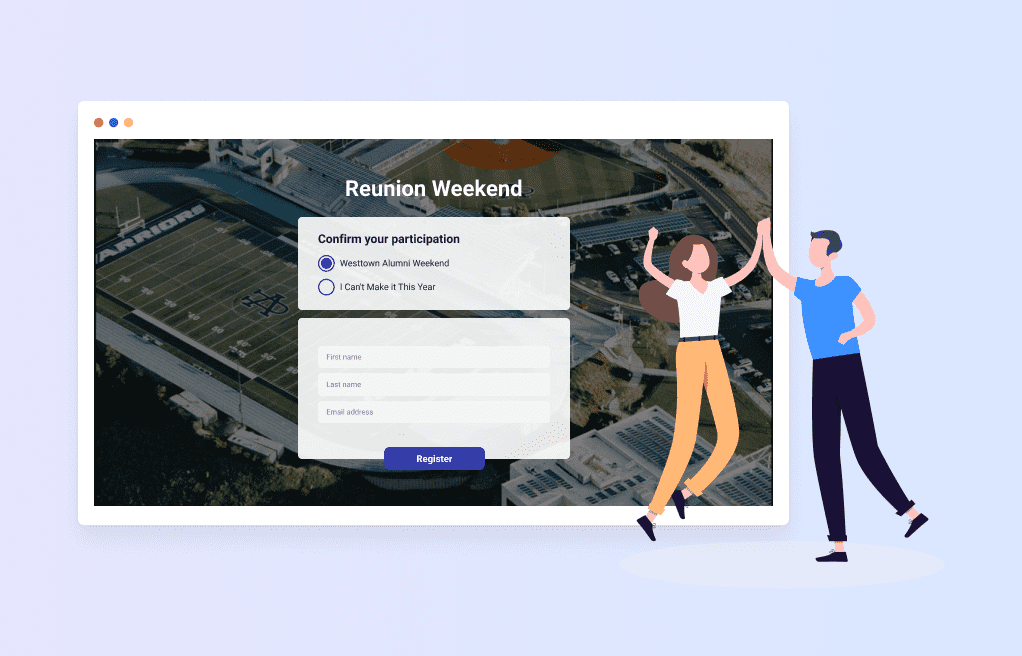
  • Custom registration forms that collect the details organizers actually need, from meal choices and dietary restrictions to t-shirt sizes and "what have you been up to?" fields.
  • A branded event website that reflects the reunion's personality, not a generic template.
  • Sub-event management for multi-day or multi-activity reunions. A welcome reception on Friday night, a main dinner on Saturday, and a casual brunch on Sunday can all be managed within a single event dashboard.
  • Guest list management with real-time RSVP tracking, so the planning committee always knows exactly where the headcount stands.
  • Automated email reminders that nudge unregistered guests without requiring manual follow-up.
  • QR code check-in on the day of the event for a smooth arrival experience.
  • Seating chart tools for assigned seating at dinner-style reunions.
  • Collaborator access so every member of the planning committee can log in, view registrations, and make updates.
  • Event duplication for recurring reunions. Organizers who run a reunion every five or ten years can duplicate a past event and update the details, saving hours of setup time.

RSVPify's pricing is straightforward, with low fees and no surprise charges. Organizers can sell tickets online and access their funds without the delays or hidden costs that come with some platforms.

For organizers ready to get started, the best next step is to explore the platform directly with event management software designed for events like reunions.

How to Find and Reach Reunion Guests

Selling tickets only works if people know the reunion is happening. For class reunions in particular, tracking down former classmates can be one of the biggest challenges.

Locating Guests

  • Social media. Facebook groups for graduating classes, Instagram throwback posts, and LinkedIn searches are often the fastest way to find alumni. Creating a dedicated reunion group or page gives organizers a central place to share updates and build excitement.
  • Alumni associations and school records. Many schools maintain alumni directories or can share contact information with reunion planning committees. Some alumni associations will even help promote the event.
  • The planning committee's networks. Each committee member likely has connections to different social circles within the graduating class. Dividing the guest list among committee members for personal outreach often produces better results than mass messaging alone.

Distributing Ticket Links

Once organizers know who to invite, getting the ticket link in front of them is the next step.

  • Email. A direct email with the event details, ticket link, and a clear deadline is the most reliable channel. Platforms like RSVPify allow organizers to send online invitations and track who has opened them.
  • Text messages. For smaller or more informal reunions, a group text with the ticket link can drive quick responses.
  • Social media posts. Sharing the event page link in reunion-specific Facebook groups or Instagram stories reaches guests who may not check email regularly.

Driving Ticket Sales Before the Deadline

Automated reminders are one of the most effective tools for closing the gap between "interested" and "registered." Setting up a sequence of two or three reminder emails, spaced a few weeks apart, keeps the reunion top of mind without overwhelming the guest list. RSVPify's guest list management tools make it easy to see who has not yet responded and send targeted follow-ups.

Day-of Check-in and Event Management Tips

After months of planning, the event itself should run smoothly. A few simple steps help ensure a seamless experience for organizers and guests alike.

  • Use a mobile check-in app. QR code check-in through an event check-in app speeds up the arrival process and eliminates the need for printed guest lists. Guests simply show their confirmation on their phone, and a quick scan marks them as arrived.
  • Plan for walk-ups. Even with pre-sold tickets, some guests will show up without registering in advance. Having a process for at-the-door ticket sales or registration keeps the line moving.
  • Track attendance in real time. A live view of who has checked in helps organizers coordinate with catering, adjust seating, and manage any last-minute changes.
  • Share access with the planning committee. Adding committee members as collaborators in the event platform means more than one person can handle check-in, answer guest questions, and monitor the dashboard during the event.

Reunion planning does not have to mean chasing payments, juggling spreadsheets, or sending dozens of individual emails. With the right tools and a clear plan, organizers can focus on what actually matters: bringing people together.

Create Your Event

About the Author

Adam Hausman co-founded RSVPify in 2013 and has been passionate about event tech and ticketing software ever since. Also founder of Greenlight Growth Marketing, he holds degrees from Indiana University (BA English/Psychology 2008) and the University of Illinois-Chicago (M.Ed. Secondary Education 2012). He lives in Maine with his wife, 2 kids, and 2 annoying cats.

Stay ahead with RSVPify

Get the latest product updates, event planning tips, and industry insights — straight to your inbox.

You can unsubscribe at any time. Your email will only be used to send RSVPify updates and will never be shared.

bottom hero