In 2026, ticketing strategy is no longer one-size-fits-all. RSVPify’s data from thousands of ticketed events shows that when people buy depends heavily on what kind of event they are attending. Leisure categories skew later and closer to the event date, while professional and logistics-heavy events are planned further ahead and bought during the workweek.
| Key takeaway: The same reminder cadence, on-sale timing, and urgency strategy will not work equally well for every event type. Ticketing teams that align campaigns to actual buyer behavior have a clear advantage. |
Friday still rules for most ticketed events
For the majority of categories in RSVPify’s dataset, Friday is the biggest purchase day. That pattern is especially strong for leisure-driven events, where buyers appear to finalize plans as the weekend approaches.
Shows and performances are the clearest example. Friday leads all days of the week, with Saturday in second place and Thursday close behind. That makes shows the only event type in the dataset where Saturday ranks as a top-two purchase day—evidence that entertainment buyers are still actively converting once the weekend begins.
Sports and recreation follows a similar late-week rhythm, with Friday first and Thursday second. The difference is that Saturday falls back closer to the middle of the pack, suggesting that sports buyers still lean late-week but are somewhat less impulse-driven than showgoers.
Reunions also peak on Friday, although the pattern is more gradual. Instead of a sharp spike, purchases build steadily from Monday through Friday, signaling a broadly even weekday rhythm that still culminates at week’s end.
Table 1. Day-of-week purchase share by event type
| Day | Show or Performance | Sports & Recreation | Reunion | Gala / Fundraiser | Conference / Expo |
| Monday | 12.5–14.3% range* | 13.8–14.2% range* | 14.3% | 15.2–15.8% range* | 16.5% |
| Tuesday | 12.5–14.3% range* | 13.8–14.2% range* | 15.1% | 15.2–15.8% range* | 18.6% |
| Wednesday | 12.5–14.3% range* | 13.8–14.2% range* | 15.3% | 15.2–15.8% range* | 18.0% |
| Thursday | 14.8% | 16.0% | 15.9% | 15.2–15.8% range* | 16.5% |
| Friday | 18.8% | 18.1% | 17.0% | 15.2–15.8% range* | 15.1% |
| Saturday | 15.6% | 13.2% | 11.6% | 10.0% | 7.7% |
| Sunday | 10.8% | 10.7% | 10.7% | 12.4% | 7.5% |
*RSVPify provided ranges rather than day-specific values for these categories.
| Fast fact: Friday is the top purchase day for shows, sports, and reunions. Conferences are the clear outlier, with Tuesday and Wednesday leading. |
Conferences break the pattern
Conference, exhibit, and expo registrations behave very differently from consumer-led ticket categories. Here, early-week buying wins decisively: Tuesday and Wednesday lead, Monday and Thursday remain strong, Friday softens, and weekends are nearly inactive.
This is pure business-hours behavior. Conference registration does not look like an impulse purchase. It looks like a work task—something attendees do while they are planning travel, budgets, approvals, and schedules.
The implication for organizers is straightforward: conference promotions should be built around Tuesday-through-Thursday visibility, not weekend urgency. Even when registration pages are always live, buyer intent is concentrated inside the workweek.
Gala buyers are steady, not reactive
Galas and fundraisers stand out for a different reason: they show the flattest weekday pattern in the dataset. Monday through Friday is almost perfectly even, while weekend conversion drops off—especially on Saturday.
That suggests a more intentional audience. Gala buyers are not strongly tied to a single peak day in the way entertainment categories are. Instead, they appear to convert when they are ready to commit, whether that decision is driven by donor intent, invitation timing, or social obligation.
For organizers, the takeaway is not to over-optimize around one weekday. A steady weekday presence matters more than a single-day spike strategy.
Shows and sports are the most last-minute categories
The purchase-timing data shows the clearest divide in the entire dataset: shows and sports draw disproportionately strong demand in the final days before the event.
Shows and performances are the most impulse-driven category overall. The largest single window is one to three days before the event, at 17.6%, with another 3.2% buying on the same day. Put together, nearly one in three buyers converts during the final week.
Sports and recreation closely mirrors that pattern. Final-week buying reaches 30.7%, suggesting a large share of attendees are checking calendars, waiting on weather, or locking in plans only when attendance feels immediate.
For ticketing teams, this matters because slow early sales do not automatically indicate weak demand. In these categories, late-stage demand is part of the normal buying curve—not a rescue scenario.
Table 2. Purchase timing by event type
| Purchase window | Show or Performance | Gala/Fundraiser | Sports & Recreation | Reunion | Conference |
| Same day | 3.2 | 1.4 | 2.0 | 0.7 | 0.7 |
| 1–3 days before | 17.6 | 9.4 | 16.5 | 3.8 | 7.2 |
| 4–7 days before | 11.9 | 9.3 | 12.2 | 4.9 | 7.2 |
| 1–2 weeks before | 13.7 | 14.2 | 14.5 | 9.3 | 10.3 |
| 2–4 weeks before | 15.8 | 27.4 | 21.8 | 17.5 | 17.3 |
| 1–2 months before | 15.8 | 28.1 | 21.4 | 30.0 | 25.7 |
| 2–3 months before | 7.9 | 7.0 | 5.6 | 13.3 | 14.0 |
| 3–6 months before | 9.7 | 2.8 | 4.8 | 15.2 | 15.1 |
| 6+ months before | 4.3 | 0.4 | 1.2 | 5.5 | 2.3 |
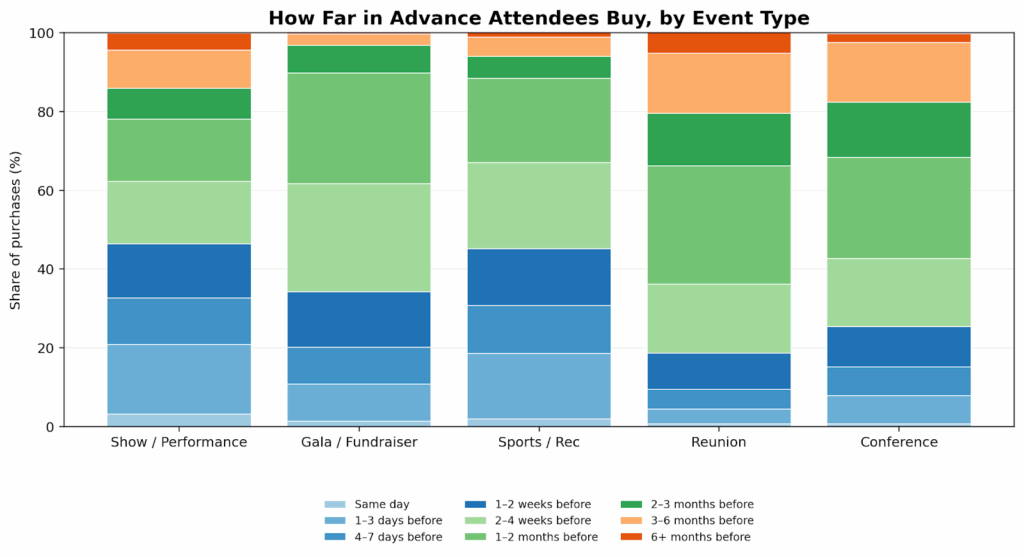
Chart 1. How far in advance attendees buy, by event type
| Fast fact: Shows have the strongest last-minute buying behavior in RSVPify’s dataset. Nearly one-third of buyers purchase during event week. |
Galas convert in a narrower, more deliberate window
Galas are less last-minute than shows and sports, but they are not classic early-bird categories either. Instead, most purchases land in a clearly defined middle window.
More than half of gala purchases—55.5%—happen between two weeks and two months before the event. Very little demand sits beyond three months out, and last-minute behavior is limited compared with entertainment categories.
That gives organizers a more predictable operating rhythm. Rather than stretching urgency across the entire sales cycle, gala campaigns can concentrate on the window when buyers are most ready to commit.
Reunions and conferences reward early registration
Reunions behave differently from both leisure events and galas. Their peak purchase window is one to two months out, but the bigger signal is how many attendees commit even earlier. More than a third of reunion purchases happen beyond two months, including 5.5% that land six months or more in advance.
That long tail reflects the reality of reunion planning. Travel, family logistics, accommodations, and time off all encourage attendees to register early if the option is available.
Conferences are the most advance-planned category overall. More than half of registrations happen over two months before the event, and 15.1% arrive in the three-to-six-month window alone. Same-day registration is almost nonexistent.
In other words, the conference buyer is a classic save-the-date planner: someone operating on budgets, approvals, and professional calendars—not a last-minute impulse.
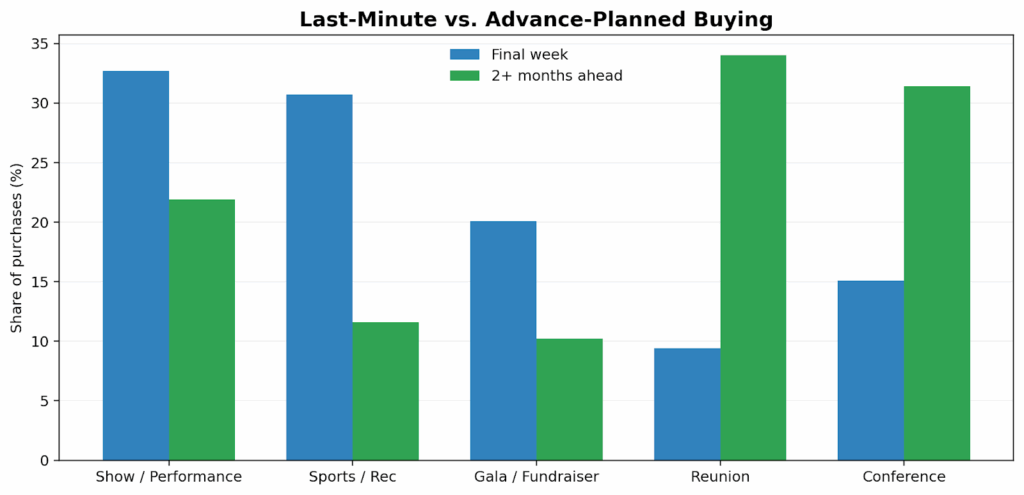
Chart 2. Last-minute vs. advance-planned buying
| Fast fact: Conference buyers are the most advance-planned overall, while reunion buyers show the longest early-commitment tail. |
What this means for event organizers in 2026
The operational lesson is clear: timing matters as much as messaging. A generic ticketing playbook will miss the real conversion windows that matter most to each audience.
For shows and sports - the final days are not an afterthought—they are a primary sales window. Ticket pages should stay polished, frictionless, and actively promoted right up to the event.
For galas - the strongest opportunity lives in the two-week-to-two-month window. That makes mid-cycle momentum more valuable than either extreme urgency or very early-bird pushes.
For reunions - registration should open early enough to capture attendees who are coordinating travel and personal logistics far in advance.
For conferences - both timing patterns matter at once: registrations happen early and overwhelmingly during the workweek. Campaigns should reflect that reality from the start.
Conclusion
RSVPify’s 2026 ticketing data makes one thing unmistakable: attendee behavior is increasingly segmented by event type. Shows and sports are driven by late-week and last-minute decisions. Galas convert in a deliberate middle window. Reunions reward early planning, and conferences follow a highly professional, early-registration cadence centered on the workweek.
For organizers, that means timing is not a minor tactical detail. It is a competitive advantage. The teams that align launch timing, reminder cadence, and urgency with actual buyer behavior will be best positioned to convert more attendees in 2026.
Methodology note: This draft is based exclusively on RSVPify data from thousands of individual ticketed events in the past year for five event categories: shows or performances, sports and recreation, reunions, galas or fundraisers, and conferences, exhibits, or expos. Percentages reflect observed purchase behavior by day of week and by registration window.

Share


Explore Al Summary:


Share:
Get the latest product updates, event planning tips, and industry insights — straight to your inbox.
You can unsubscribe at any time. Your email will only be used to send RSVPify updates and will never be shared.