Back to all posts
March 26, 2025
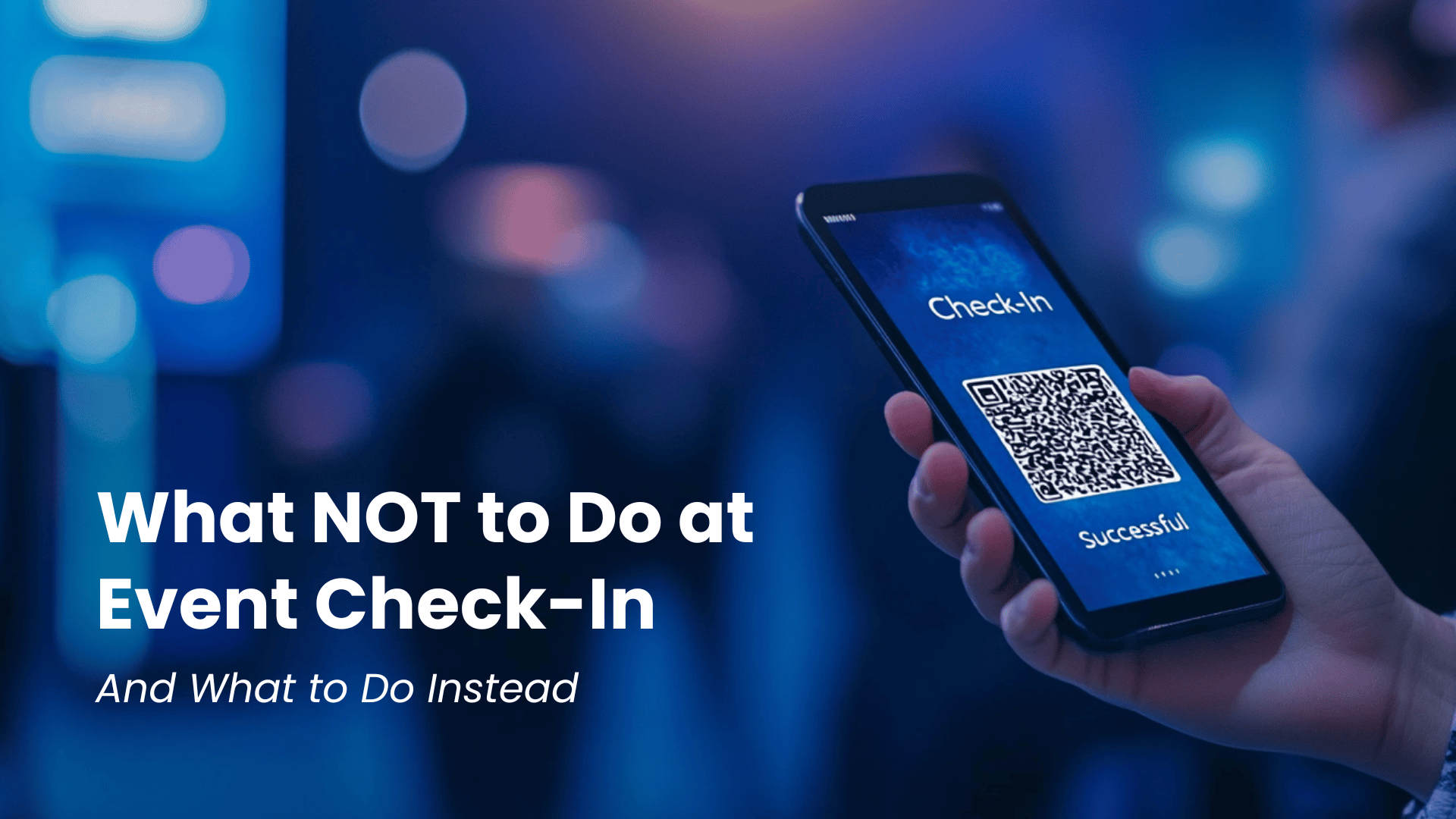
For many attendees, the event check-in process is the first direct interaction with a brand. Whether an organization is hosting a corporate conference, a gala, or a product launch, a smooth and welcoming check-in sets the tone for the entire experience. A poorly managed check-in, on the other hand, can frustrate guests and create a negative impression that lingers long after the event ends.
Check-in is more than a logistical step. It is the first live brand touchpoint, and it shapes how attendees perceive every moment that follows. Event professionals often cite the arrival moment as one of the most critical touchpoints for shaping attendee perception, which means event teams have an extremely narrow window to set the right tone.
The stakes are real. A smooth arrival builds goodwill that carries into sessions, networking, and sponsor interactions. A frustrating one creates a deficit that event teams spend the rest of the day trying to overcome. For organizations investing significant budgets in venue, catering, and programming, a chaotic arrival experience can undermine all of that effort before the opening remarks even begin.
Treating check-in as a strategic moment, not just a queue to get through, allows event planners to reinforce professionalism, build trust, and create momentum for the rest of the day.
The following are among the most common event check-in mistakes and how they can impact attendees, collaborators, or guests:
To create a seamless and memorable check-in experience, event organizers should focus on both digital and physical elements of the process.
With so many options available, selecting the right check-in platform requires a clear set of evaluation criteria. Event planners should prioritize tools that match the scale, complexity, and goals of their events.
QR code scanning speed matters most during peak arrival windows. The fastest platforms process each scan in a matter of seconds, keeping lines short even when hundreds of guests arrive at once. Real-time attendance dashboards give organizers instant visibility into who has arrived, who is missing, and how capacity is tracking against projections.
Badge printing integration should be seamless, not a separate workflow. Look for platforms that trigger on-demand badge printing the moment a guest checks in, with full customization for layout, branding, and attendee-specific details. Self-service kiosks extend capacity without adding staff, and the best solutions support both attended and unattended modes.
Offline capability is a non-negotiable for venue environments where Wi-Fi may be unreliable. Platforms like RSVPify's event check-in app allow check-in to continue uninterrupted, syncing data automatically once the connection returns. Mobile device support ensures that staff can check in guests from any position on the floor using smartphones or tablets, not just fixed stations.
Finally, the right event management software should connect check-in data to the rest of the event workflow: registration, communications, reporting, and follow-up. An integrated platform eliminates data silos and gives teams a single source of truth from planning through post-event analysis.
The most efficient approach combines digital tools with well-trained staff. QR code scanning tied to a pre-loaded guest list allows for near-instant verification, while self-service kiosks let attendees check themselves in. Pairing technology with friendly, prepared staff ensures that edge cases are handled smoothly without slowing down the main line.
A common guideline is one check-in station for every 75-100 expected attendees during peak arrival. Events with staggered arrival times or multiple session tracks may need fewer stations, while single-entry events with tight start times may need more. Running a brief test with projected arrival patterns helps organizers fine-tune the setup.
Pre-event communication is the single biggest lever. When attendees arrive with their QR code ready and know exactly where to go, check-in times drop dramatically. On-site, adding self-service kiosks, using alphabetical or category-based line splits, and ensuring reliable Wi-Fi (or offline-capable software) all contribute to faster processing.
Having a dedicated walk-in station prevents unlisted guests from blocking the main check-in flow. Staff at that station can verify the guest's identity, process on-the-spot registration, and issue a badge, all without disrupting the experience for pre-registered attendees. A guest list management platform with real-time editing capabilities makes this process seamless.
Mobile check-in is faster, more accurate, and far easier to update in real time. Printed lists require manual searching, cannot reflect last-minute changes, and offer no data capture for post-event reporting. Mobile solutions also support QR scanning, badge printing triggers, and live attendance dashboards, giving organizers capabilities that paper simply cannot match.
A well-executed check-in process does more than move people through a door. It builds confidence, reinforces professionalism, and gives every attendee a reason to feel good about what comes next. By combining the right technology with thoughtful on-site planning, event teams can turn a routine logistical step into a powerful first impression.
About the Author
Adam Hausman co-founded RSVPify in 2013 and has been passionate about event tech and ticketing software ever since. Also founder of Greenlight Growth Marketing, he holds degrees from Indiana University (BA English/Psychology 2008) and the University of Illinois-Chicago (M.Ed. Secondary Education 2012). He lives in Maine with his wife, 2 kids, and 2 annoying cats.
Get the latest product updates, event planning tips, and industry insights — straight to your inbox.
You can unsubscribe at any time. Your email will only be used to send RSVPify updates and will never be shared.